“Music subscription economics continue to hit the wrong note […] the main culprit for all the red ink is licensing fees.” That is the leading executive summary point of SNL Kagan’s new edition of its annual Economics of Mobile Music, which documents fast growth of music subscriptions, but worries about financial sustainability. Continue Reading →
One of the recent developments in pre-1972 copyright protection was a win by video hosting service Vimeo in June, where the court ruled that the company could apply safe harbor provisions to those songs. That appeal ruling is now facing a fresh attack. A2IM, the RIAA, and Concord have filed an amicus brief in support of original plaintiff Capitol Records and requesting that the full New York federal appellate court rehear the case. Continue Reading →
Warner distribution division has shut down several accounts for small retailers of physical music. According to Pitchfork, WEA is enforcing a policy that requires a minimum annual order of $10,000 for stores with direct accounts. Continue Reading →
Apple has proposed a new royalty structure for streaming music, one that would be simpler but could create a financial pinch for freemium services. In a proposal to the U.S. Copyright Royalty Board, Apple recommended a system where all on-demand streaming services would pay songwriters a statutory rate of 9.1 cents per 100 plays. Continue Reading →
by Matt Graves
Yesterday’s announcement that Rhapsody would rebrand as Napster across its global music service empire caused flashbacks in the minds of digital audio veterans. Matt Graves helped launch Rhapsody in 2001, and has worked in the online media fields for even longer. In this guest column he reviews the astonishing and unlikely history of Napster. Continue Reading →
One pre-1972 copyright case that has escaped broad awareness is Capital Records vs. Vimeo, the high-end video platform. Vimeo has just won an appeal that absolves it from treating pre-1972 music content differently from post-1972 music content. Continue Reading →
Join RAIN Founder Kurt Hanson and RAIN President Brad Hill on Tuesday, September 20 Hilton Downtown Nashville A full day of discussion, interviews, and new research on all aspects of the quickly evolving online audio marketplace. A G E N…
Continue Reading →
by Vickie Nauman
Guest columnist Vickie Nauman is Principal and Owner of CrossBorderWorks Consulting & Advising, and was U.S. President of 7digital for two years. Here, she identifies five points of sustainability in the new music industry. Continue Reading →
Brief news items and worthy reads from around the web: Troy Carter goes to Spotify — is it a trend signal? Also The Pirate Bay returns to its original domain and Apple’s App Store is getting a big revamp. Continue Reading →
With the recent wave of music industry organizations worldwide releasing their data for 2015, two distinct trends have emerged. One of them is a growing dissatisfaction with the flow of money through ad-supported streaming services. Some reports just imply frustration, while others have centered on YouTube as the symbolic scapegoat for their anger about the amount of revenue generated by that type of media platform. Continue Reading →
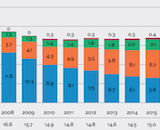
The IFPI has released its 2016 global report, which points to streaming as the key reason behind music’s first year of significant total revenue growth since 1995. Global revenue rose 3.2% last year to $15 billion. Digital outperformed physical revenue for the first time, a result that echoes the U.S. trend highlighted by the RIAA’s annual report. Within that strong performance, streaming emerged as a powerhouse, accounting for 43% of the year’s digital revenue. Continue Reading →
by Angus MacDonald
Intellectual property attorney Angus MacDonald was the first to calculate that Pandora paid more than half of all SoundExchange collections of royalties to record labels. In this column, he calculates a higher percentage for 2015, noting that the growth of SoundExchange royalty collections is tied closely to Pandora, and that the pace is slowing. Continue Reading →