
 James Cridland, radio futurologist, is a conference speaker, writer and consultant. The original post is HERE. James also publishes Podnews, a daily briefing on podcasting. Buy James a coffee HERE.
David Jones, a premium department store chain in Australia, was placed under administration last week. The 188 year-old retailer, with 6,000 employees, will close many of its stores – potentially almost all of the stores in out-of-town shopping malls. Out of the 38 stores it runs, it’s likely to keep just twelve. They’re the biggest stores in the shopping malls they operate – mainly in Westfield shopping centres; so it’ll make quite the dent in those places, as well.
In ten years, I think I went to David Jones a couple of times. Once about eight years ago to buy a set of cast iron cooking pans; and once this year, because David Jones had sent me a $10 voucher with no minimum spend for my birthday. I ended up buying a jar of honey for $12.50. The honey was nice enough. But I couldn’t work out why it made any sense to go there.
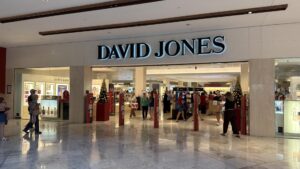 The thing about David Jones is that it just sold other peoples’ stuff. I can buy any of the brands inside a David Jones in those brands’ own stores, probably in the same shopping mall; and probably cheaper, too. There was literally nothing that you needed to visit David Jones for any more: especially with the internet just a click away. This wasn’t the case thirty years ago. It’s most certainly the case now.
Apart from, perhaps, the people. At its best, I’m told that David Jones had knowledgeable, clever local people who were great at understanding what shoppers want, and would give good advice about something you were trying to buy. They’d become well-known to the shoppers, and recognised in the store every day. The people, the articles say, were the reason that shoppers came to David Jones. Like Laudie Sneddon, who worked for the company for fifteen years “helping customers”. They offer significant additional value – though perhaps not value that’s easy to see on spreadsheets. But, people cost money; and so, cost-cutting means that they’ve gone. When I last visited, like many large department stores David Jones felt deserted. Trying to find someone to pay – let alone to ask questions – was difficult, in a large, deserted, store, just running on automatic.
David Jones seemed to have forgotten what made it unique.
At this point, you’re probably wondering why I’m writing about an Australian department store, and what on earth this has to do with radio.
The thing about music radio is that it just plays other peoples’ stuff. I can listen to any of the songs played on the radio on Spotify or other music services, on my own schedule. There’s not much that you need to listen to the radio for, especially with the internet just a click away. This wasn’t the case thirty years ago. It’s most certainly the case now.
Apart, from, perhaps, the people. At its best, radio stations have knowledgeable, clever local people on the air who are great at understanding what listeners want. They’d be well-known to listeners, and recognised wherever they went. Those people, the presenters, are the reason that listeners come to music radio. They offer significant additional value – though perhaps not value that’s easy to see on spreadsheets. But, people cost money; and so, cost-cutting means that they’ve gone. Listen to many music radio stations during much of the day or night, and it’s non-stop music: a radio station that feels deserted, just running on automatic.
It seems to me that, for some stations, we may have forgotten what makes radio unique.
I’m often asked what the future of radio is. I suspect that we can learn a lot from an ailing department store.