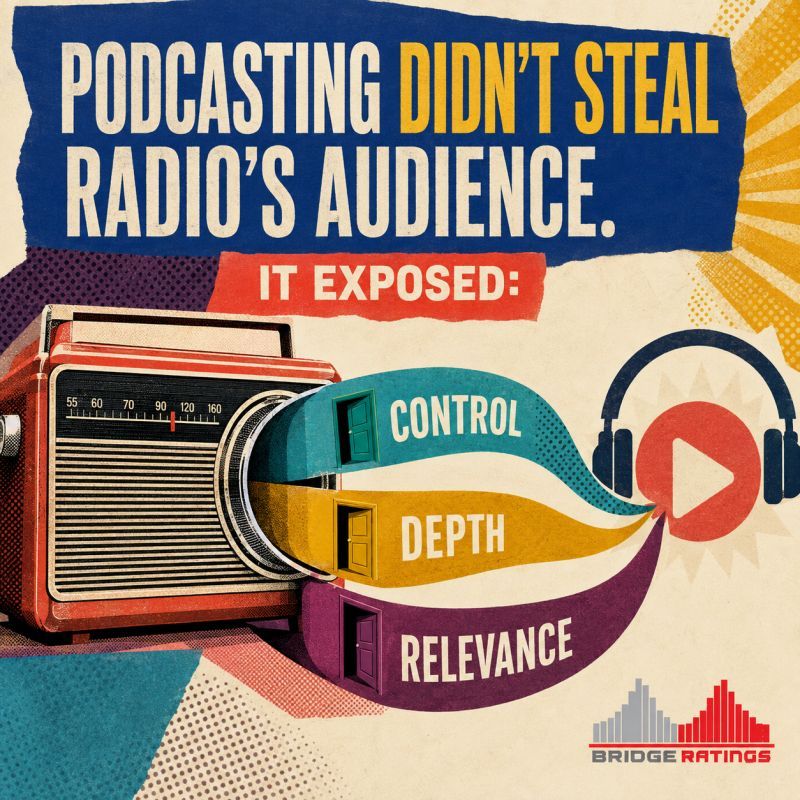

Non-thieving exposure
Dave Van Dyke, head of Bridge Ratings Media Research, has posted an editorial: “Podcasting Didn’t Steal Radio’s Audience.” He observes that the radio industry has treated podcasting as a competitor which stole listeners from radio. “That explanation may be comforting; it is also largely wrong,” he asserts. Instead, podcasting identified listener needs that radio was not serving, and provided content built around specific interests rather than listener demographics. From that premise flows a substantial essay that unfolds aspects and details of the premise. He carefully observes that podcasting shouldn’t be considered superior, and observes that “radio remains immediate, effortless, and free.” It’s a meaty, detailed editorial, worth a full read (HERE).

The FCC has approved bankruptcy exit details proposed by Cumulus Media (RAIN HERE and HERE) … but with conditions. First, there is a newsroom protection pledge, wherein CEO Mary Berner agreed (legally binding) to maintain current newsroom staffing levels (not necessarily preservation of individual roles, in our reading) for at least two years. Second, the FCC is allowing a transfer of broadcasting licenses to a new group of shareholders. Heath Freeman (President of Alden Global Capital), will hold 32% voting interest in the revived and restructured entity.


The question of podcast definition gets a new airing in the latest Podcast Perspectives from Podglomerate. Guest expert Glenn Rubinstein, founder of podcast ad agency ADOPTER Media, is the guest expert. The topic is The Future of Podcast Measurement, a perennial and seemingly endless topic of discussion and debate. Central to the conversation is the recently released AMP Accords (RAIN coverage HERE), the Oxford Road document which seeks to define and standardize podcasting and the monetization of podcasting. Rubinstein asserts that the Accords are necessary, and discusses whether the proposals could make a real difference in how advertising is bought and sold. Listen HERE.